Dragon Drop | MVP completed July 2023
Dragon Drop: Desktop app for tabletop RPG game masters and publishers
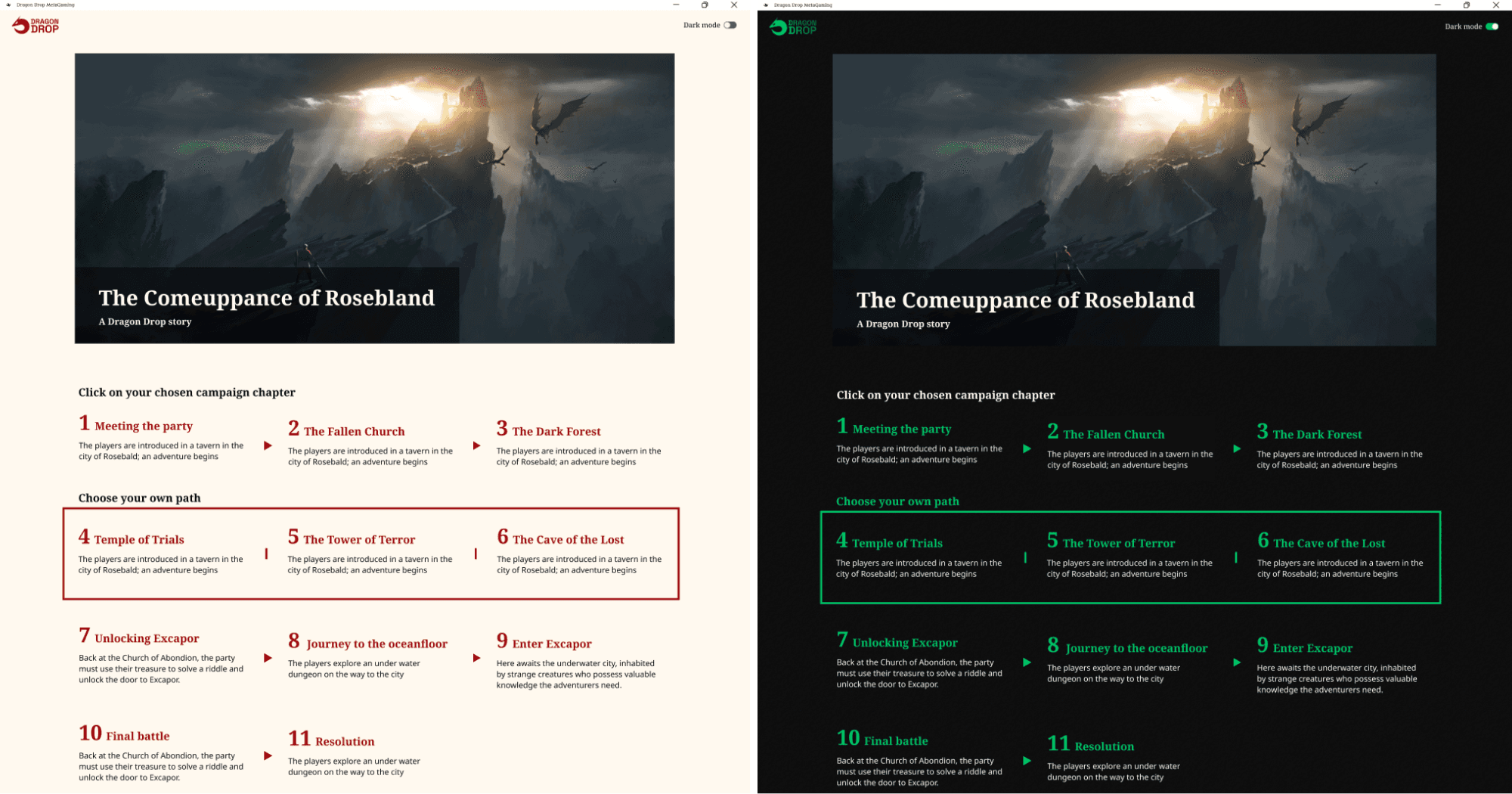
Summary
I designed the Dragon Drop desktop app, a platform for game masters and indie publishers of tabletop RPGs
Working closely with the founder, I designed and tested the platform through multiple iterations, always focusing on solving user pain points
The final high-fidelity prototype was handed to a Bubble agency, who built a functioning demo app now available for use
What is Dragon Drop?
Preparing and running a tabletop RPG such as a Dungeons and Dragons adventure requires an investment in time and effort on the part of the game master or ‘dungeon master’.
Similarly, publishers of these adventures struggle to get their creations out to the millions of people who love to play these games.
Dragon Drop is a company and platform seeking to address these problems.
I was brought in as the designer to bring the founder’s vision to life.
Working closely with him I designed the platform, testing with users at each stage, until we had a high-fidelity prototype for the minimum viable product (MVP).
The problem
Before designing the solution, I needed to understand the issues game masters and publishers were facing. From the research already conducted, and through interviews with prospective users, these were the problems I found.
Game masters have these issues:
Materials: Preparing for an adventure often means getting hold of the story text - usually in PDF form - and various other assets such as maps, character sheets, location information, and images, from disparate sources.
Preparation time: Once all this information is gathered, the game master then needs to study up on the adventure so they can run a smooth game.
Finding the information in-game: Wading through pages and pages of PDF files or print outs is annoying, and breaks immersion.
Small publishers have these issues:
Constructing their adventures: They will usually write their adventures into a program such as Google Docs or Word, and then publish it as a PDF - resulting in the problems for game masters listed above.
Sharing the adventure: Getting their work out there to an audience is a struggle in a crowded field
Designing the solution
The founder had already researched these issues in depth for his MBA thesis and had a vision for a platform that solved them.
The core idea: give game masters the information they need, when they need it.
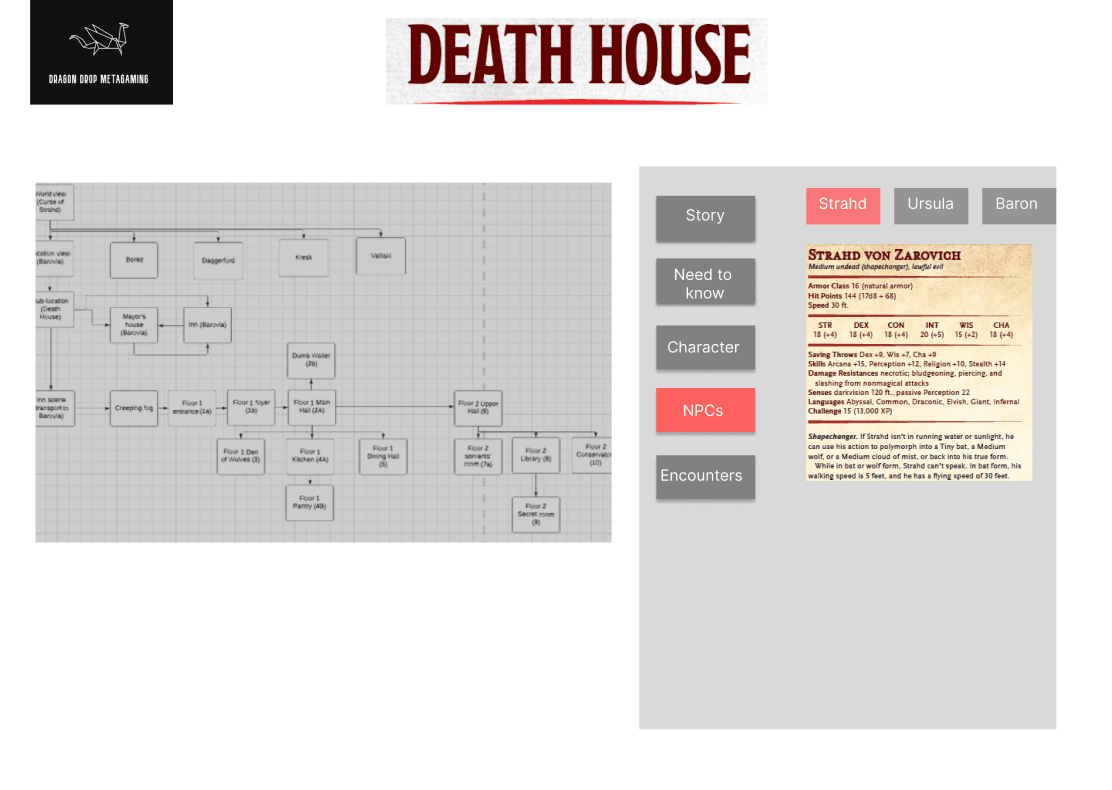
The first concept the founder came up with was a screen with a story flow on the left and an e-reader on the right, with tabs for maps, characters, and other assets.
This was my starting point for the design.
Working in sync and asynchronously with the founder, I developed the idea, always seeking to make the platform more intuitive, easy to use, visually appealing, and cohesive with each iteration.
I conducted tests of the prototypes with active game masters, using their feedback to guide the next iteration.
First high-fidelity iteration
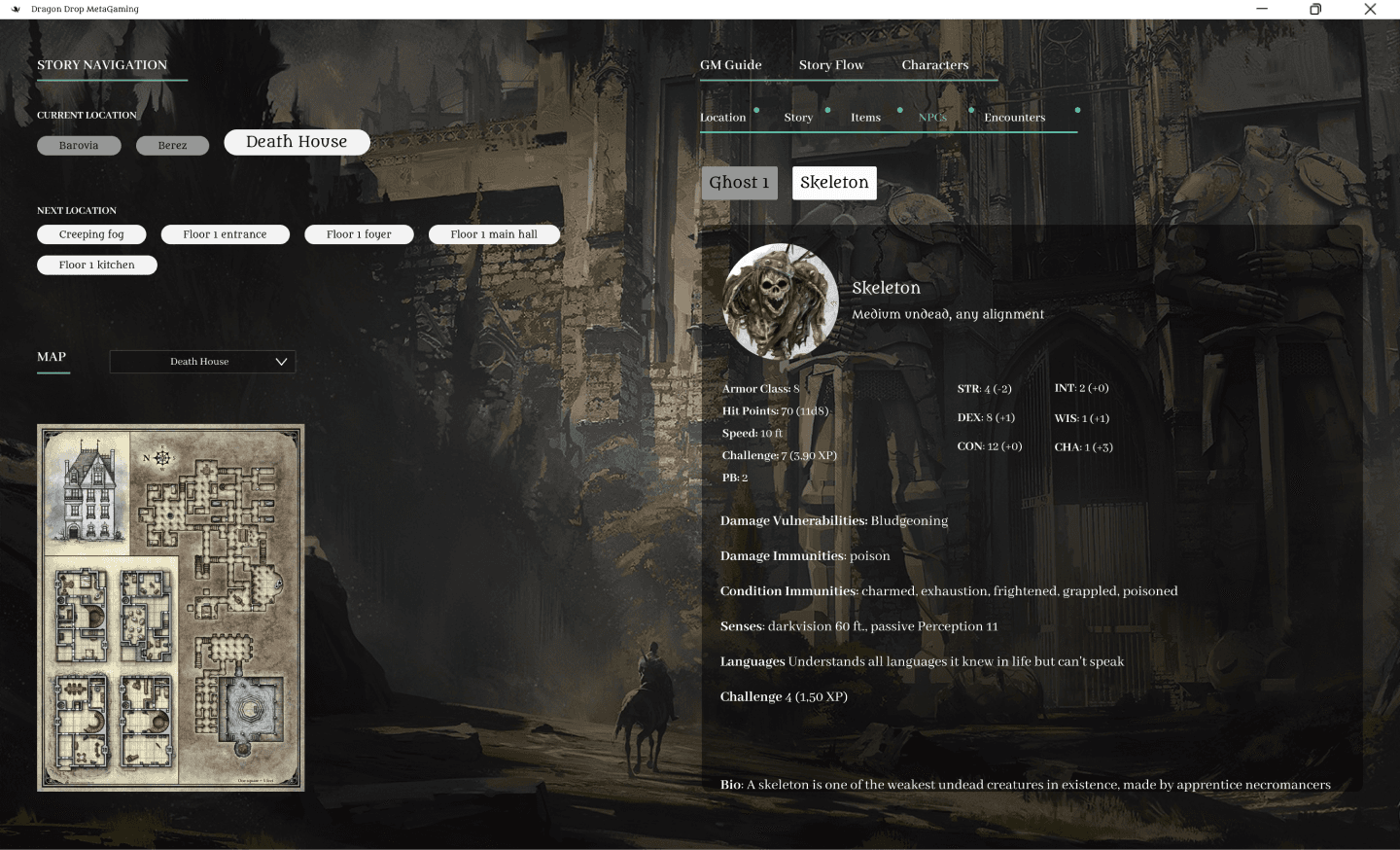
This was the first high-fidelity iteration, but upon testing we realised there were a few issues.
The navigation on the left flowed by location - but this would be inflexible for publishers, as stories often allow players to return to locations at different stages, with different action taking place
The tabs at the top were confusing
The map was taking up a lot of screen space, but users said maps only needed to be referred to sporadically
Second iteration
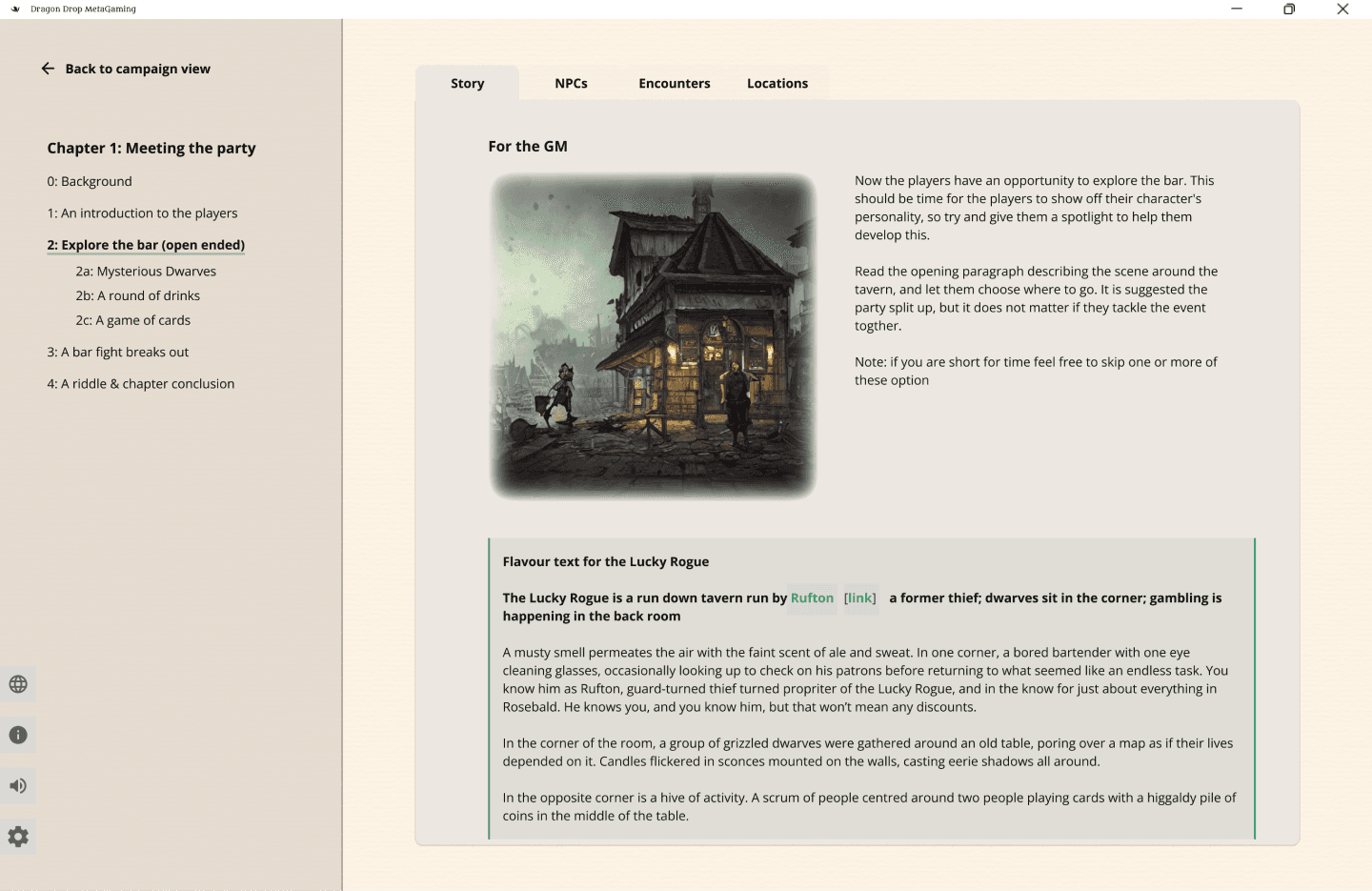
Here, I’d made many improvements based on user feedback.
The navigation was now led by chapters and ‘events’, which could be organised however the publisher desired.
The e-reader on the right hand side now had fewer tabs, and it was clear what tab was selected at which time.
Maps and other features that didn’t need to be so prominent were now out of the way in the icons on the bottom left.
Final iteration for the MVP
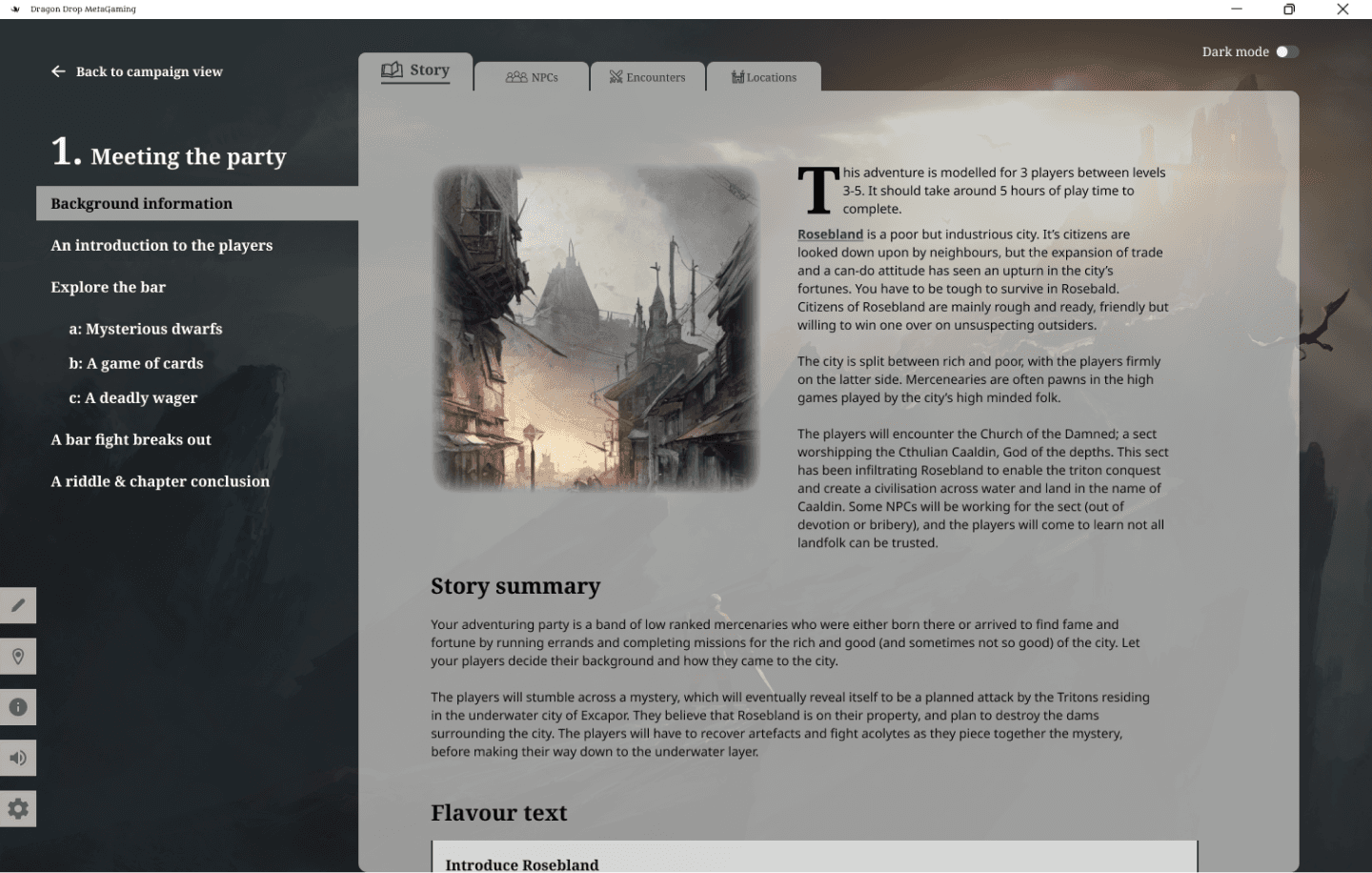
The final iteration used colour, typography, and a background image to liven up the visual feel of the app.
This was the basis for the minimum viable product.
This final design, in the form of a fully interactive prototype containing a full playable story, was delivered to an agency who developed the demo in Bubble.